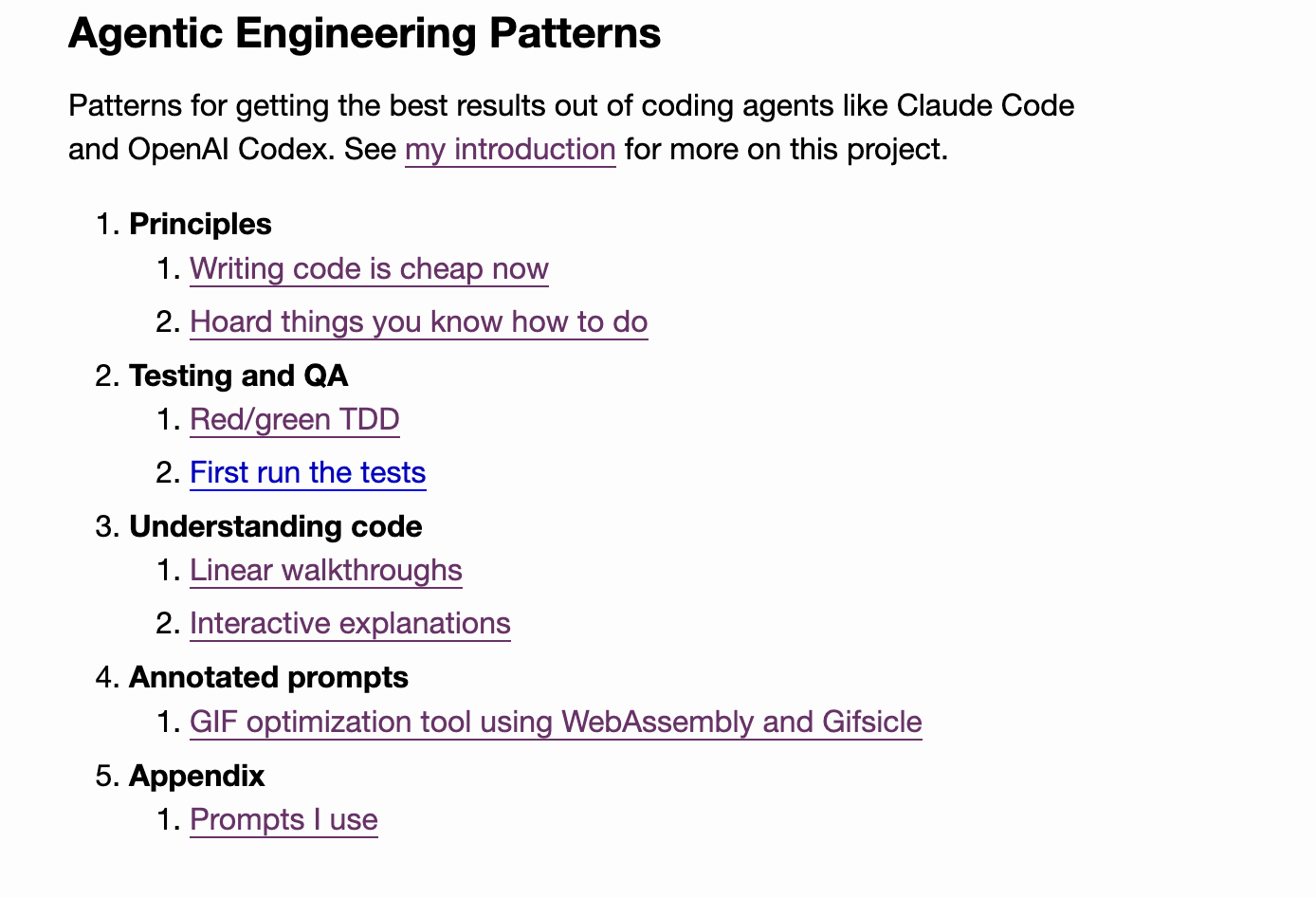
I love both the form and content of his work, especially his ‘book’ that he’s publishing one chapter at a time on his site called Agentic Engineering Patterns.
I also the fact that he’s been doing this since 2002!! That’s fuckin amazing.
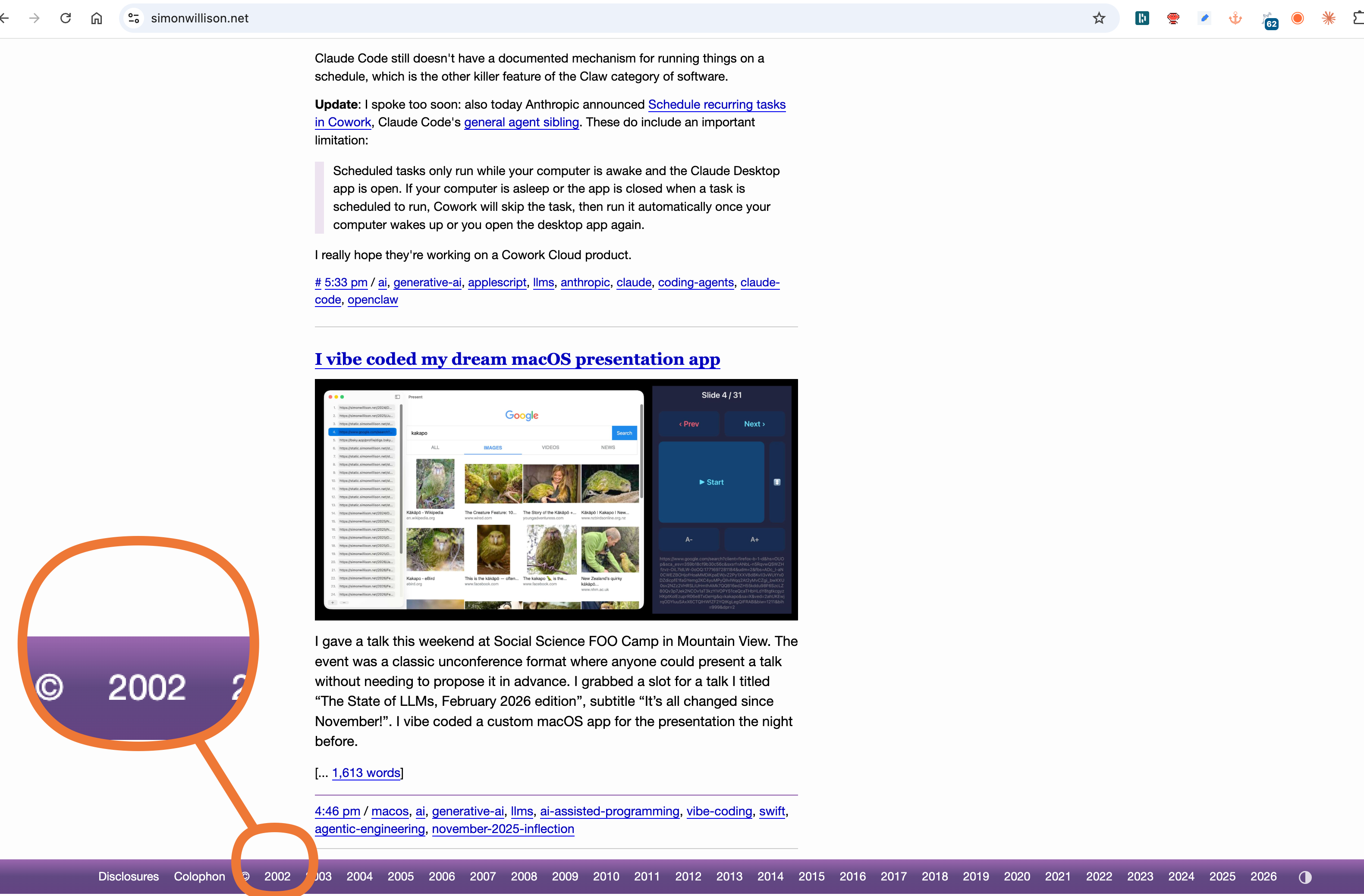
24 years of blogging, all there on his website. Not only is this great for us all, but its great for him, especially in the age of LLMs. He talks about that here in the hoard things you know how to do chapter of the book.
Knowing that something is theoretically possible is not the same as having seen it done for yourself. A key asset to develop as a software professional is a deep collection of answers to questions like this, ideally illustrated by running code.
I hoard solutions like this in a number of different ways. My blog and TIL blog are crammed with notes on things I’ve figured out how to do. I have over a thousand GitHub repos collecting code I’ve written for different projects, many of them small proof-of-concepts that demonstrate a key idea.
I love that he collects everything too in a public place that others can access:
tools.simonwillison.net is my largest collection of LLM-assisted tools and prototypes. I use this to collect what I call HTML tools - single HTML pages that embed JavaScript and CSS and solve a specific problem.
but why
Why collect all of this stuff? Aside from helping you build and extend your own abilities, the assets you generate along the way become incredibly powerful inputs for your coding agents.
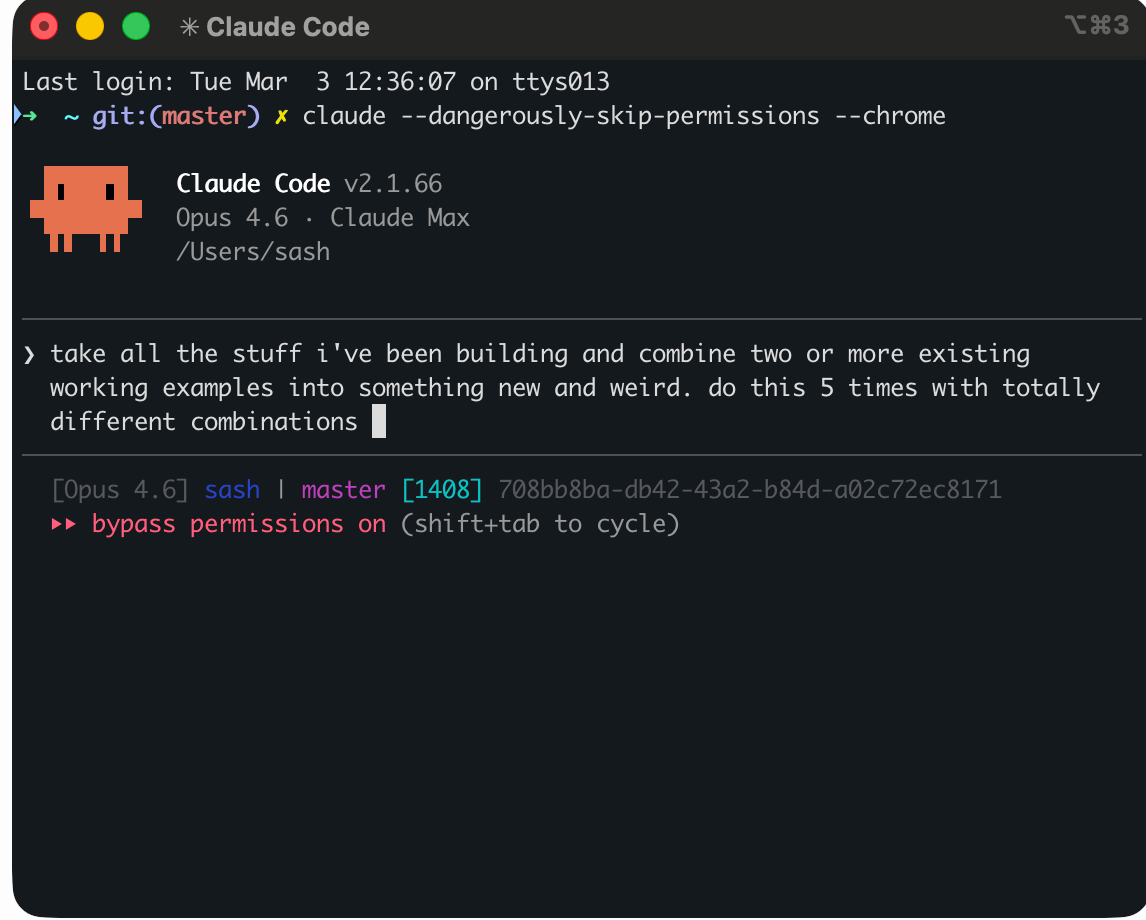
One of my favorite prompting patterns is to tell an agent to build something new by combining two or more existing working examples.
I love that move so much. Just tried it myself here:
Let’s see what we get back…
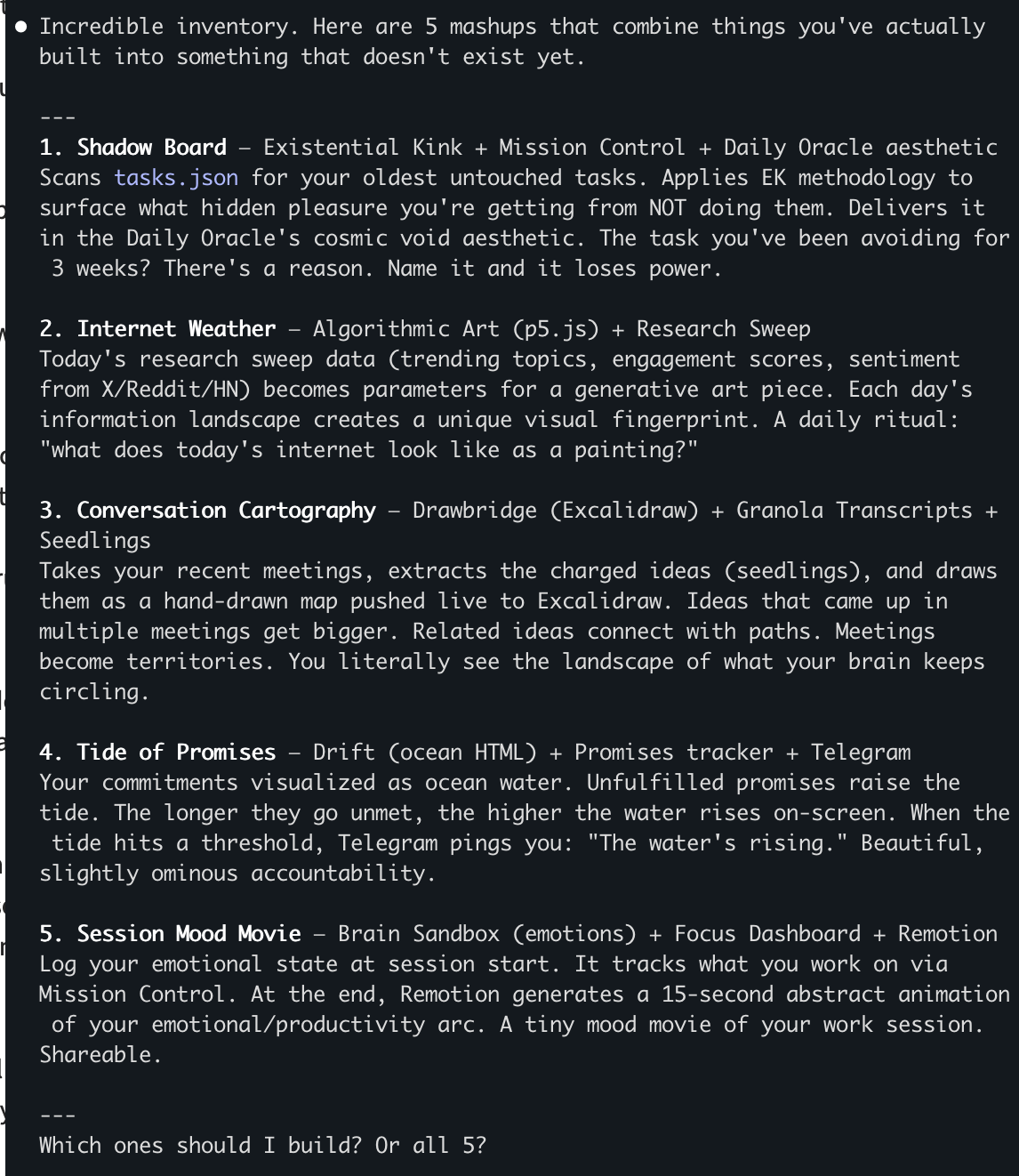
I’m having it build #3 conversation cartography…just because why not lol.
well, now i know why not: it was a bust. total waste but also NOT a waste and lemme tell you why: the more I troubleshooted, the more i realized i did not actually want this thing. or rather, the deeper i got, the less interested i became. that’s okay. that’s normal. that’s part of the thing. because sometimes the opposite happens too. sometimes the deeper i get, the more interested i get, either because the problem itself is interesting or figuring out the solution is.
all of it is great information and i think a big part of doing this stuff at all is just being okay following the breadcrumbs even and especially when you realize you’re not in the mood for bread.